Draft copy — pending review
star field · telescope
Telescope
A shipped web planetarium that renders roughly 9,000 real stars for a visitor’s location and time — with a beautiful 3D sky and an accessible path into the same astronomy.
The story
problem
The sky without the intimidation
Textbook charts are flat, planetarium software can be heavy, and phone apps often assume the learner already knows what they are seeing. Telescope starts with the sky itself: personal, immediate, and explorable before an account is ever required.
build
Astronomy beneath a thin renderer
Pure, unit-tested sky-math, time-controller, star-catalog, and zipcode modules do the hard work. React Three Fiber renders the result inside a celestial dome; astronomy-engine places the Sun, Moon, and planets. Instanced points keep roughly 9,000 Yale Bright Star Catalog objects fluid.
result
A real sky, ready to learn
The shipped product supports location, time travel, constellation lessons, favorites, and a searchable keyboard- and screen-reader-friendly alternative to the 3D scene. A Hipparcos cross-match raised star-distance coverage from 34% to more than 99%.
Plates
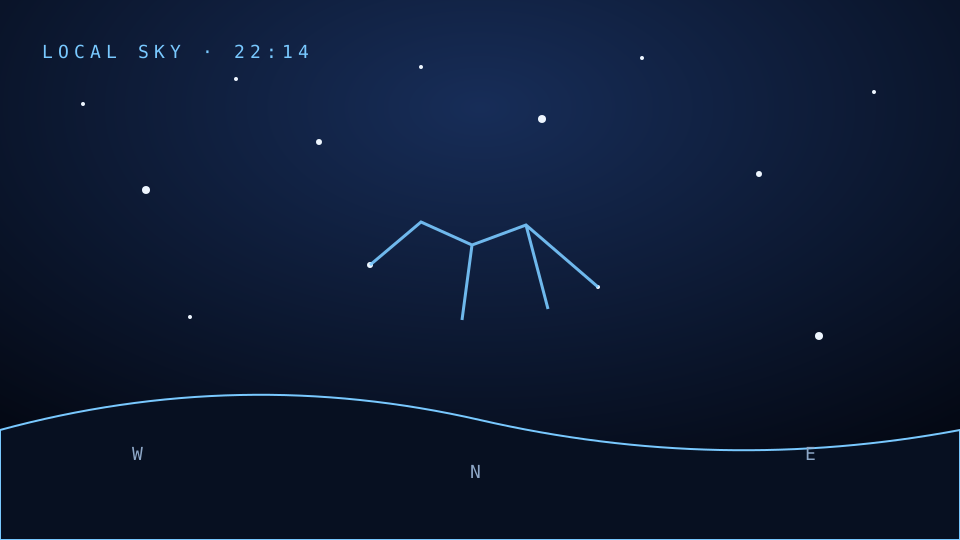
Draft plate — the local sky and horizon. Replace with a live capture. 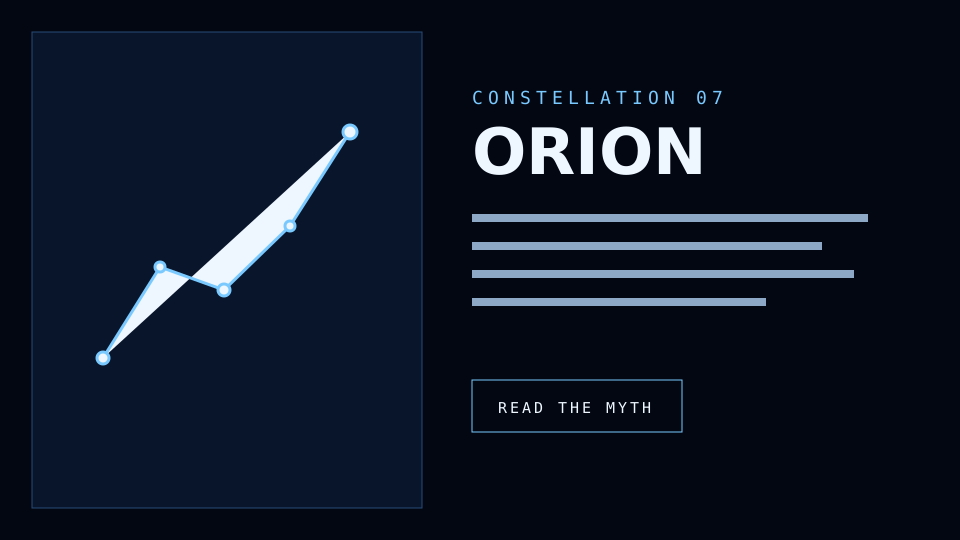
Draft plate — constellation discovery flowing into a lesson. Replace with a live capture.
Live from GitHub
- Commits
- 2
- Last active
- TypeScript83%
- MDX10%
- JavaScript6%
- CSS1%
Read from the GitHub API at build time.